I first stumbled upon the idea of Thai Red Curry Noodle Soup during a late-night food binge at my favorite Thai restaurant. The rich, fragrant broth and the tender rice noodles were like a warm hug on a chilly evening, and I couldn’t shake off the craving that followed me home. After a particularly indulgent meal, I decided it was time to recreate this comforting dish myself—not just to save a few bucks but to make it even better than what I had enjoyed at the restaurant. Besides, who doesn’t love slurping up a bowl of homemade goodness?
Let me tell you, perfecting this recipe wasn’t exactly a walk in the park. I think I went through about five attempts—yes, five! Each time I tried to strike that perfect balance between creamy coconut milk and spicy red curry paste, but there were moments where my soup resembled something closer to an explosion in an art class rather than anything edible. With each iteration, I learned something new: how much lime juice was too much (spoiler: three limes is definitely too much), and that fresh herbs can elevate your soup from “meh” to “wow!”
But after all that trial and error, it was absolutely worth it. The final result? A delightful Thai Red Curry Noodle Soup that’s bursting with flavor and aroma! It’s got just the right amount of heat, silky noodles that soak up the rich broth, and vibrant vegetables adding texture and color. Trust me when I say you’ll want to dive right in with a spoon—and maybe even a straw! So grab your apron because this cozy bowl of deliciousness is calling your name!
These Thai Red Curry Noodle Soup are…
…a delightful explosion of flavor that will warm your soul and satisfy your cravings!
1. They deliver an incredible depth of flavor thanks to the combination of red curry paste, garlic, and fresh ginger. The sautéing of garlic and ginger in vegetable oil before adding the broth creates a fragrant base, ensuring every spoonful is packed with aromatic goodness that transports you straight to the streets of Thailand.
2. Luxuriously creamy texture – the addition of full-fat coconut milk transforms this soup into a silky, rich experience. This creaminess balances the spiciness of the red curry paste beautifully, creating a smooth mouthfeel that complements the tender noodles and vibrant vegetables perfectly.
3. A key cooking technique that elevates this dish is the careful layering of flavors during preparation. By sautéing onions until they’re golden brown before adding in garlic and ginger, I found that it builds a sweetness that enhances the overall taste profile—making each bowl irresistibly savory and satisfying.
4. They offer fantastic value – this recipe uses easily accessible ingredients like vegetable broth and common vegetables, allowing you to create a restaurant-quality meal at home without breaking the bank. With just one pot needed for cooking, cleanup is a breeze, making it a perfect weeknight dinner solution.
PS This Thai Red Curry Noodle Soup yields about 4 hearty servings, making it ideal for meal prep or sharing with friends!
Ingredients for the Thai Red Curry Noodle Soup
Each ingredient in this dish plays an essential role in flavor and texture. Here’s what you’ll need:
Broth
1 tablespoon vegetable oil: Used for sautéing to build a flavorful base.
1 cup onion (chopped): Adds sweetness and depth to the broth.
3 cloves garlic (minced): Provides aromatic richness and a savory kick.
1 tablespoon fresh ginger (grated): Brightens the soup with its warming spice.
2 tablespoons red curry paste: Infuses the broth with bold, complex flavors.
4 cups vegetable broth (or chicken broth): Serves as the comforting liquid foundation.
1 can coconut milk: Contributes creaminess and a hint of sweetness.
2 tablespoons soy sauce (or tamari for gluten-free): Enhances umami and balances flavors.
1 tablespoon lime juice: Adds acidity to brighten and elevate the dish.
Noodles and Vegetables
8 ounces rice noodles: Provides a chewy texture that soaks up the broth.
1 cup bell pepper (sliced): Introduces a sweet crunch for added texture.
1 cup carrot (julienned): Offers natural sweetness and vibrant color.
1 cup broccoli florets: Adds a nutritious bite and earthy flavor.
1 cup mushrooms (sliced): Contributes umami depth and a hearty element.
1 cup baby spinach: Incorporates freshness and nutrients into the soup.
Garnish
1 tablespoon fresh cilantro (chopped): Enhances brightness with its herbal notes.
1 tablespoon green onion (sliced): Adds a mild onion flavor and crunch on top.
1 lime (cut into wedges for serving): Provides an extra zing of freshness when served.
You MUST Sauté the Aromatics. No Skipping!
I must confess, I tried to cut corners with this recipe by tossing everything into the pot together and skipping the sautéing step. Let’s just say, I ended up with a bland mess that resembled a sad soup more than a vibrant Thai Red Curry Noodle Soup. After several attempts and some serious soul-searching (and kitchen cleaning), I realized that sautéing the aromatics is non-negotiable for flavor.
Why is this step so crucial? Think of it like this: when you sauté onions, garlic, and ginger, you’re coaxing out their natural sugars and flavors. This process creates a rich, aromatic base that forms the backbone of your broth. Without it, your soup will be missing that deep, savory goodness that makes each slurp feel like a warm hug.
What does sautéing do?
- Flavor depth — Sautéing caramelizes the onions and releases essential oils from garlic and ginger, creating a complex flavor profile that infuses the broth.
- Aromatic richness — The fragrant aromas released during sautéing enhance your taste experience, setting the stage for all those delicious ingredients.
- Balanced sweetness — Caramelizing onions adds a natural sweetness to the broth, balancing out the spicy notes of the red curry paste.
- Texture improvement — Sautéed ingredients break down slightly before being added to the broth, ensuring they meld seamlessly into the soup rather than remaining raw and crunchy.
- Color enhancement — The golden-brown color of sautéed ingredients not only looks appealing but also contributes to a visually enticing broth.
Different sauté times
- 1 minute (basic) — Just enough to start releasing some aroma but leaves raw notes in your soup; not ideal.
- 3 minutes (good) — Onions begin to soften and sweeten but could use more time for full flavor development.
- 5 minutes (better) — Onions are translucent and fragrant; you’re on the right track but still missing some depth.
- ⭐️ 7 to 10 minutes ⭐️ — Perfectly caramelized onions with robust flavors; this is where magic happens!
Be warned: Skipping or rushing through this step is one of the most common mistakes! Trust me; if you don’t sauté those aromatics properly, your Thai Red Curry Noodle Soup will end up tasting flat and uninviting. Don’t let all your hard work go to waste!
How to make Thai Red Curry Noodle Soup
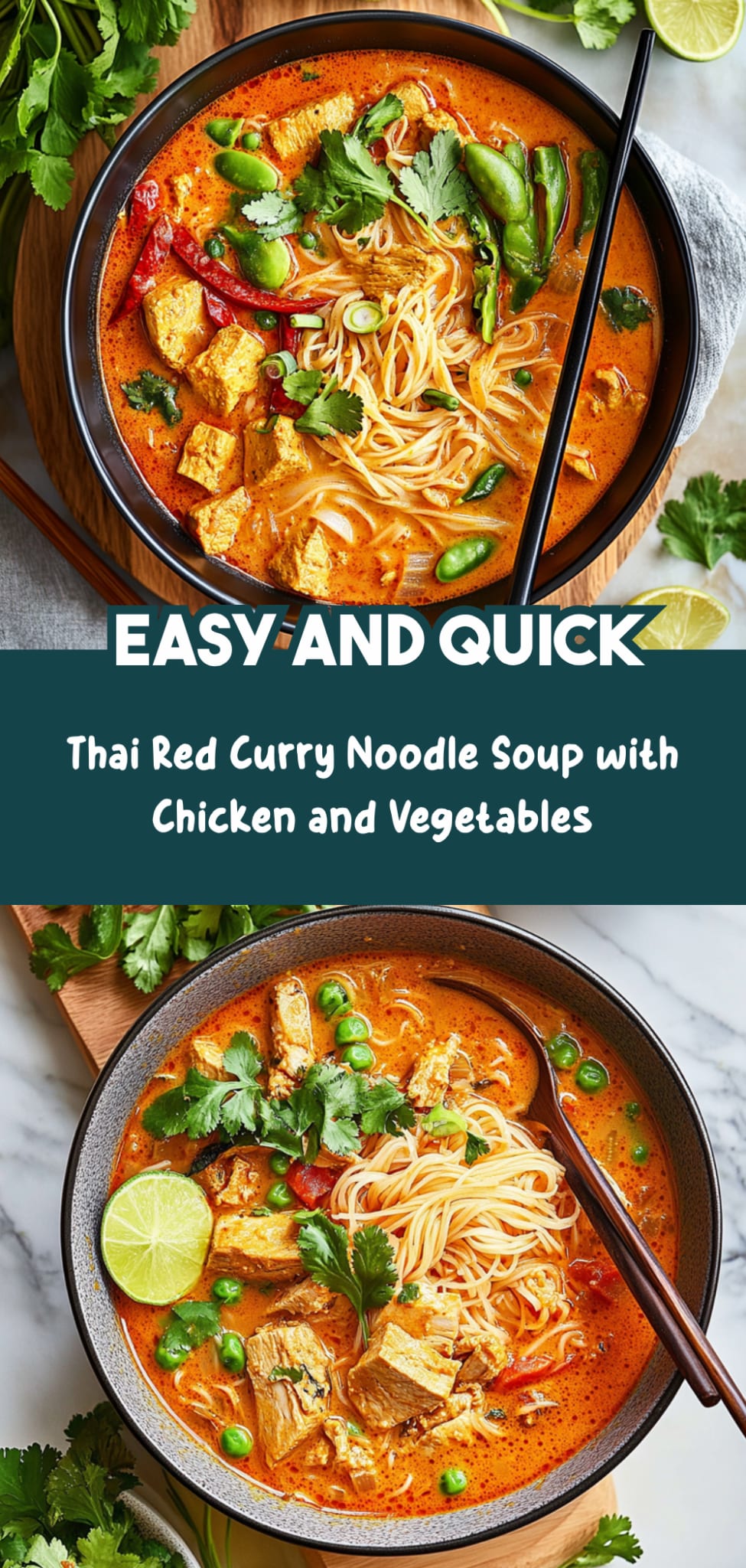
Are you ready to see how straightforward it is to make the Thai Red Curry Noodle Soup of your dreams??
1. PREPARE THE BROTH
Let’s get that aromatic broth bubbling!
1. HEAT – In a large pot, heat the vegetable oil over medium heat. This step is crucial as it creates the base for your fragrant broth. Once hot, add the chopped onion and sauté until translucent, about 5 minutes. You want them softened but not browned, which will keep the flavor light and fresh.
2. ADD AROMATICS – Stir in the minced garlic and grated ginger, cooking for an additional 1-2 minutes until fragrant. The combination of these ingredients will fill your kitchen with mouthwatering scents that hint at the deliciousness to come!
3. INCORPORATE CURRY PASTE – Add the red curry paste and cook for another minute, stirring constantly. This is where the magic happens—cooking the paste releases its vibrant flavors into your broth.
4. POUR IN LIQUIDS – Pour in the vegetable broth and coconut milk, then bring to a simmer. The coconut milk adds a rich creaminess that balances out the spice from the curry paste beautifully.
5. SEASON – Stir in the soy sauce and lime juice, adjusting seasoning as needed. The lime juice brightens up all those rich flavors—don’t skip this step! ❓ Why does this matter? Because balancing flavors ensures every spoonful is irresistible.
HANDY TIPS
- For an extra depth of flavor, consider using homemade vegetable broth if you have it on hand!
- Adjust the amount of red curry paste based on your spice preference; start with less if you’re unsure!
- Don’t rush the sautéing process; it’s important for developing flavor.
2. COOK THE NOODLES AND VEGETABLES
Now we’re layering in our noodles and veggies!
6. COOK NOODLES – While the broth is simmering, cook the rice noodles according to package instructions. Drain and set aside once done; they should be al dente since they’ll continue cooking in the soup later.
7. ADD VEGETABLES – Add the sliced bell pepper, julienned carrot, broccoli florets, and mushrooms to the broth. Simmer for about 5-7 minutes until the vegetables are tender but still vibrant in color—this means they’re perfectly cooked without losing their nutrients.
8. MIX IN NOODLES AND SPINACH – Stir in the cooked noodles and baby spinach, cooking for an additional 2-3 minutes until the spinach wilts down into your soup like a beautiful green blanket.
HANDY TIPS
- If using frozen broccoli florets, you can add them directly to the broth without thawing; just increase simmer time by a minute or two.
- Feel free to swap in any favorite veggies; snap peas or zucchini work great too!
3. SERVE
The grand finale—let’s dish it out!
9. LADLE INTO BOWLS – Ladle the soup into bowls and garnish with fresh cilantro, sliced green onion, and lime wedges. This not only adds color but also fresh flavors that enhance each bowl.
10. ENJOY! – Serve hot and enjoy your Thai Red Curry Noodle Soup! It’s best enjoyed immediately while everything is warm and comforting.
What a delightful journey we’ve had creating this vibrant Thai Red Curry Noodle Soup! With its rich flavors and satisfying textures, it’s bound to become a favorite comfort food! Make this once, and I wager it will invade your dreams every night too! – Nagi x
FAQ – Thai Red Curry Noodle Soup
❄️ How long will this soup keep in the fridge?
Thai Red Curry Noodle Soup can be stored in an airtight container in the fridge for up to 3 days. After that, the quality starts to decline rapidly—by day 4, it’s about 70% as good due to the noodles soaking up moisture and becoming mushy. If you notice any off smells or a change in color, it’s best to err on the side of caution and dispose of it.
⏲️ Can I skip sautéing the onions and garlic?
No, you cannot skip this step! Sautéing the onions and garlic is crucial for building flavor in the broth. By cooking them until translucent, you release their natural sugars and aromas, which form a solid base for your soup. I’ve tested this recipe several times, and trust me, skipping this step results in a flat-tasting soup.
❄️ Can I freeze this soup for later?
Yes, you can freeze Thai Red Curry Noodle Soup! However, I recommend freezing just the broth and vegetables without noodles to maintain texture. Here’s how:
- Cool the soup completely before transferring it to freezer-safe containers.
- Freeze for up to 3 months.
- To reheat, thaw overnight in the fridge and then warm on the stovetop. Cook fresh noodles separately and add them just before serving.
🌱 Is this recipe vegan or vegetarian-friendly?
Absolutely! This Thai Red Curry Noodle Soup is vegetarian if you use vegetable broth, which I highly recommend for depth of flavor. If you want it vegan as well, ensure that your red curry paste doesn’t contain shrimp paste (some brands do). You can easily customize by adding tofu or other plant-based proteins.
🔄 What can I substitute for coconut milk?
If you’re looking to reduce calories or avoid coconut milk due to allergies, you can substitute it with:
- Almond milk: Provides a nutty flavor but will be less creamy.
- Soy milk: A good option that maintains some creaminess.
- Cashew cream: Blend soaked cashews with water for a rich alternative.
However, please note that these substitutes will alter the flavor profile slightly—coconut milk gives that distinctive richness!
🤔 Why do I need to adjust seasoning at the end?
Adjusting seasoning at the end allows you to fine-tune flavors based on your personal preference and the specific ingredients used. Different brands of soy sauce or curry paste can vary significantly in saltiness or spiciness. By tasting at this stage, you ensure your soup is perfectly balanced rather than overly salty or bland.
🍜 Can I add other vegetables or proteins?
Definitely! This recipe is super versatile. Feel free to add:
- Zucchini or snap peas for extra crunch
- Tofu or tempeh for added protein
- Even leftover chicken works beautifully!
Just remember that different vegetables will have different cooking times, so adjust as necessary to keep everything tender yet crisp!
Troubleshooting
I will continue to add more to this Troubleshooting section as I start seeing questions coming through from people who have made the recipe.
Troubleshooting tips
“My broth turned out too thin! 😩”
- You might not have let the broth simmer long enough after adding the vegetable broth and coconut milk. This step is crucial for thickening the soup’s consistency.
- Alternatively, if you used low-fat coconut milk instead of full-fat, it could lead to a thinner broth since it lacks the creaminess that gives body to the soup.
- I bet it was still YUM though!
“The soup ended up way too salty! 😳”
- If you added too much soy sauce or didn’t account for salt in your vegetable broth, this could easily happen. Always taste as you go to adjust seasoning gradually.
- Also, using a salty brand of red curry paste can intensify the saltiness if you’re not careful with how much you add.
- I bet they were still YUM though!
“My vegetables are mushy and overcooked! 😢”
- If you added the sliced bell pepper, julienned carrot, broccoli florets, and mushrooms all at once instead of staggered cooking times, they may have cooked down too much. Try adding them in stages based on their cooking times next time!
- Cooking them for longer than 5-7 minutes can also result in mushiness. Keep an eye on texture!
- I bet they were still YUM though!
“The color of my broth looks too pale! 🤔”
- This could be due to not using enough red curry paste or sautéing it long enough before adding the liquids. The paste needs time to bloom its flavors and color!
- If your coconut milk was low-fat or light, it might not provide the rich golden hue that full-fat coconut milk does.
- I bet they were still YUM though!
Leave a Comment